
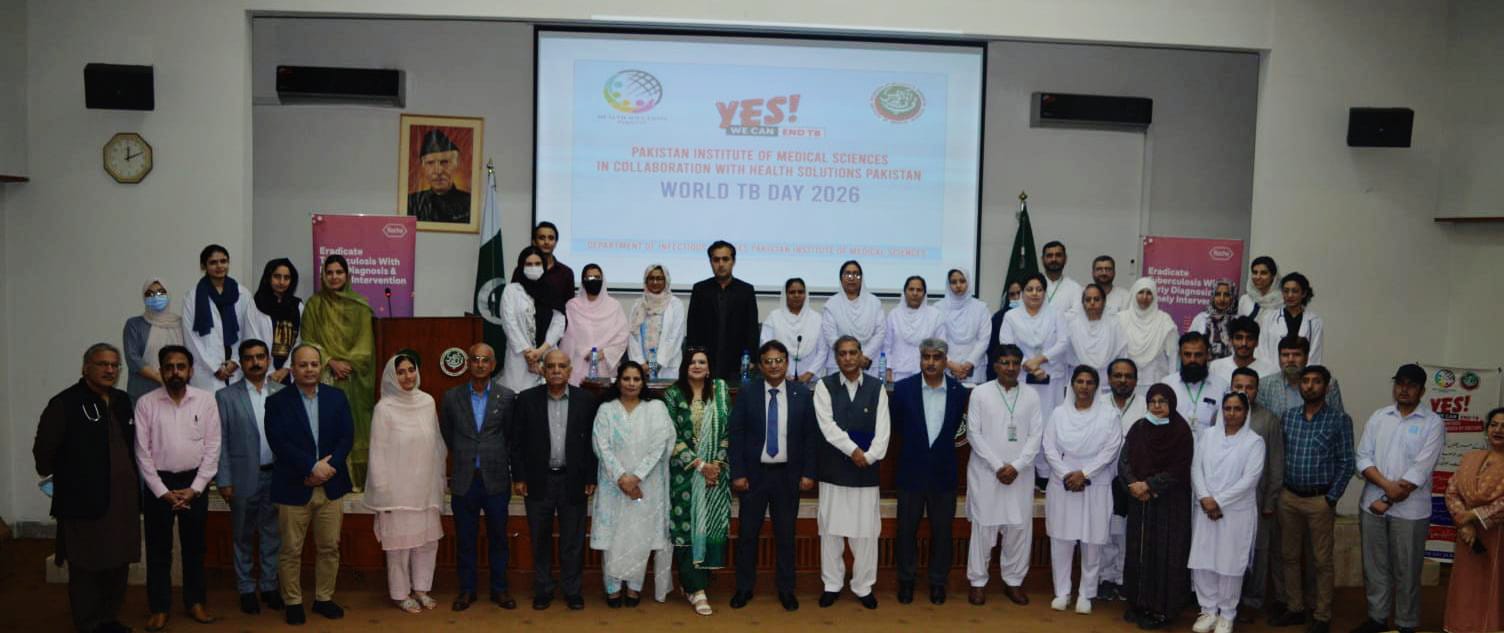
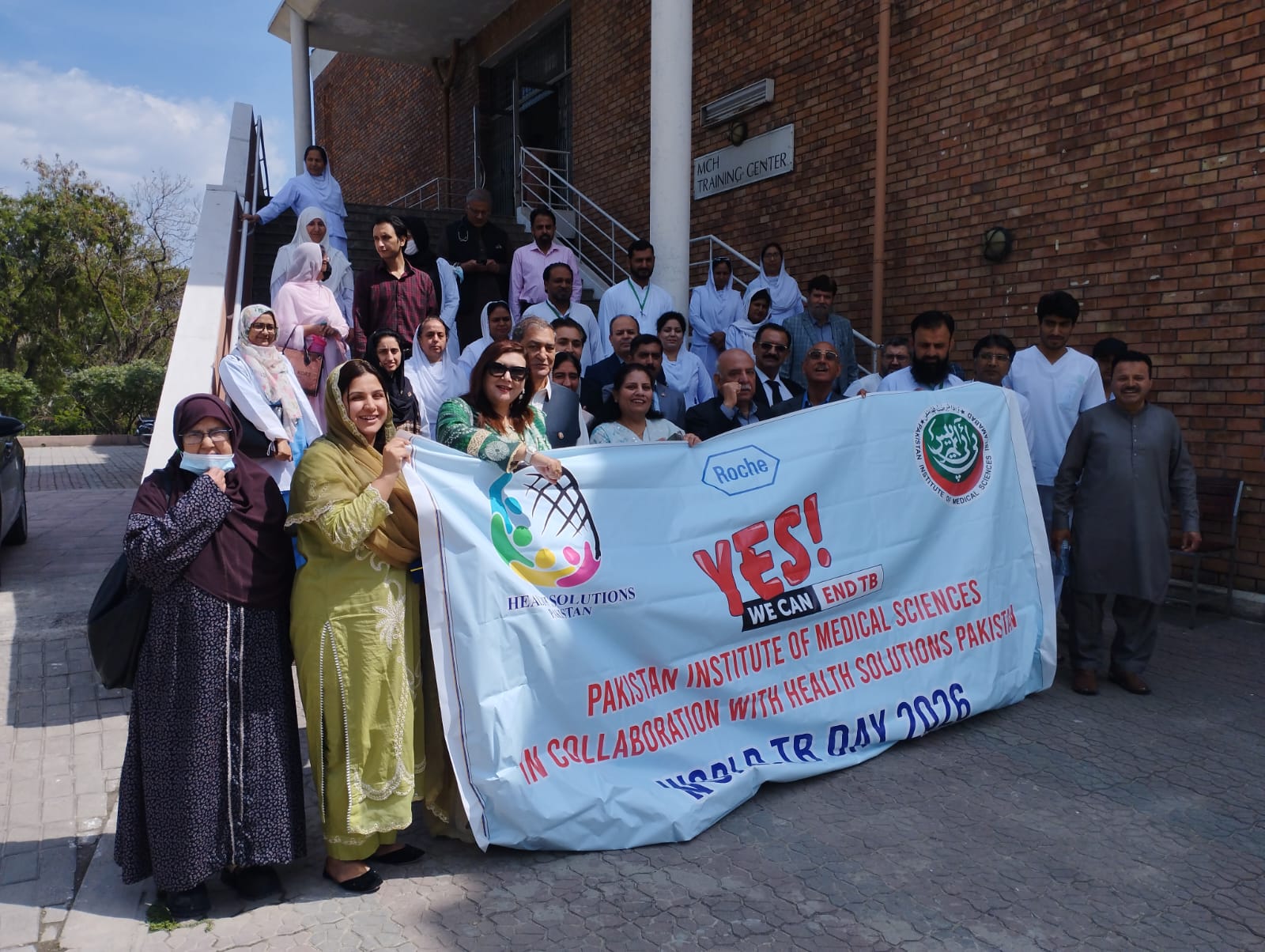
The high-level event was organized by Health Solutions Pakistan in collaboration with the Pakistan Institute of Medical Sciences, bringing together leading public health experts, clinicians, policymakers, and development partners to reaffirm their commitment to eliminating TB in Pakistan.
The session was chaired by Professor Dr. Imran Sikandar and supported by the PIMS administration, including Dr. Irum (DED Non-Medical) and Dr. Aneeza (DED Medical). Prominent participants included Dr. Ejaz Qadeer, Chairperson Health Solutions Pakistan; Dr. Razia Fatima, TB Consultant and Advisor to national and global TB initiatives UNOPS; Dr. Karam Ali Shah, Advisor Stop TB and Dopasi Foundation; and Dr. Abdul Ghafoor, Founding Member of Pakistan Chest Society. The event was moderated by Professor Dr. Nasim Akhtar from the Infectious Diseases Department.
The speakers highlighted the historical significance of March 24, marking the discovery of Mycobacterium tuberculosis by Robert Koch, a milestone that laid the foundation for diagnosing and treating TB worldwide.
Dr. Razia Fatima shared insights on Pakistan’s progress in combating TB, including significant improvements in case detection through enhanced diagnostic capacity. She emphasized that despite progress, a substantial number of TB cases remain missing, calling for stronger private sector engagement to bridge this gap. She also stressed the urgent need for sustainable financing and a multisectoral response to accelerate efforts toward TB elimination. Dr. Fatima was also recognized for her global contributions, including being awarded The Union Medal in 2024, one of the most prestigious honors in the field of lung health.
Dr. Ejaz Qadeer appreciated the Government of Pakistan’s stewardship in the national TB response and reiterated the private sector’s commitment to supporting TB control efforts through collaboration and service delivery expansion.
Dr. Karam Shah highlighted the importance of capacity strengthening at tertiary care hospitals and called for continued engagement through technical working groups to address institutional needs effectively.
Professor Dr. Nasim Akhtar presented compelling case studies on complicated TB management, underscoring the need for improved human resource capacity and integrated diagnostic systems utilizing multi-disease testing platforms.
The event concluded with a symbolic awareness walk and the distribution of shields among TB champions in recognition of their contributions to the fight against tuberculosis.
The gathering reinforced a unified message: ending TB requires collective action, sustained investment, and innovation across all sectors.